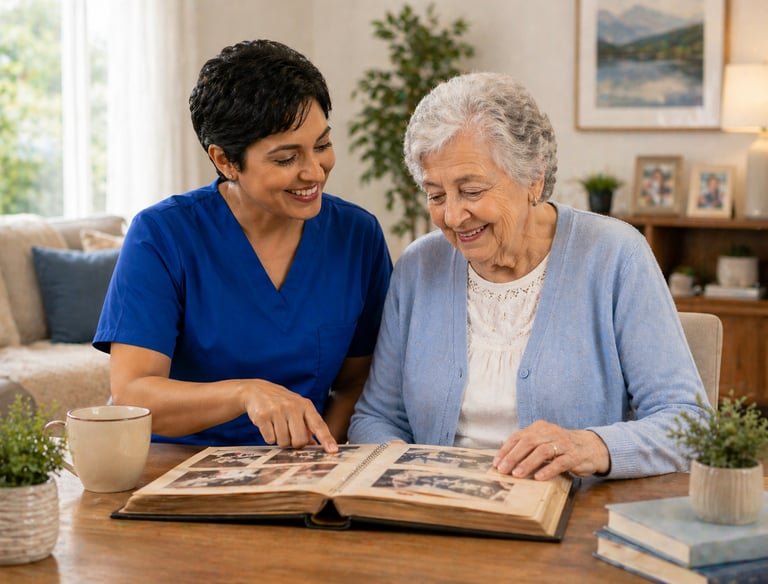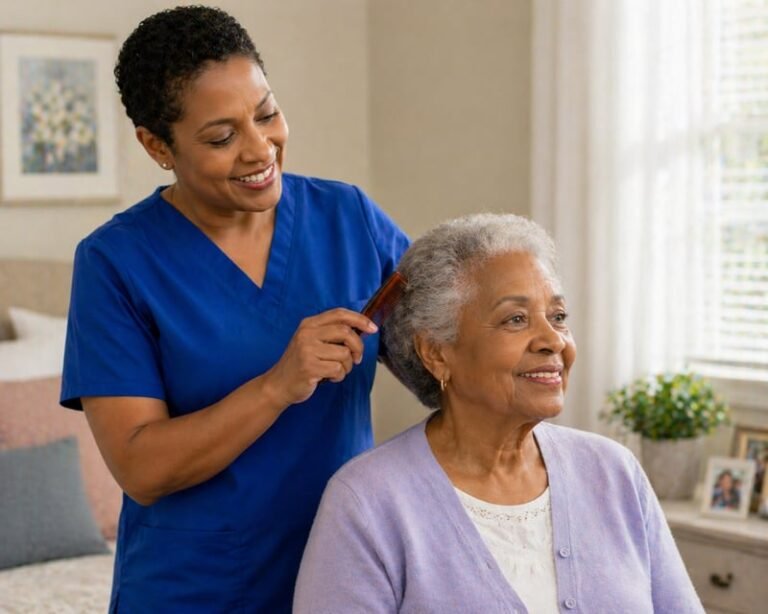

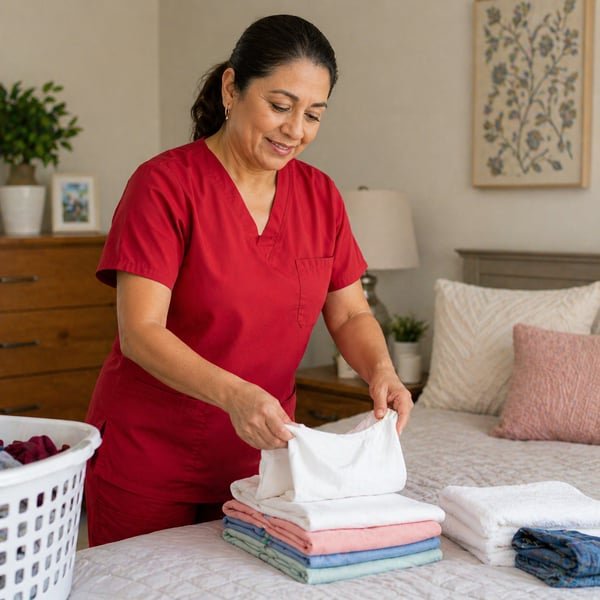
Ask almost any older adult where they want to live as they age, and the answer is the same: right here, at home. The familiar kitchen, the neighbors, the garden, the chair by the window. Staying home is possible for a lot of people, but it works best when the family plans ahead instead of reacting after a fall or a hospital stay.
This aging in place checklist is meant to be worked through together with your parent. It covers home safety room by room, daily care, emergencies, money and the support network that makes staying home realistic, including when home care might fit into the plan.
What is aging in place?
Aging in place simply means staying in your own home as you get older, rather than moving to assisted living or another care setting. The National Institute on Aging notes that the best time to think about how to age in place is before a lot of care is needed (NIA).
It doesn’t mean doing everything alone. Most people who age in place successfully rely on a mix of home changes, family help, community services and, often, paid caregivers as needs grow.
Why do seniors want to age in place?
The reasons are usually personal: independence, control over daily routines, memories tied to the house, staying close to friends, church and familiar doctors, and the comfort of their own bed. For people with early memory loss, familiar surroundings can also make daily life less confusing.
There are practical reasons too. With part-time help, staying home can cost less than moving, and your parent gets one-on-one attention instead of sharing staff with many other residents.
Is aging in place better than assisted living?
It depends on your parent’s needs, the home and the support around them. Aging in place tends to work well when the home can be made safe, your parent can get help with the tasks they struggle with, and they aren’t isolated. Assisted living may be the better fit when someone needs supervision most of the day and night but the family can’t arrange it at home, or when loneliness is a bigger problem than the house.
The NIA puts it this way: home-based services can be expensive, but they may cost less than moving into a residential facility (NIA). The deciding factor is usually how many hours of help are needed.
How to prepare your home for aging in place
Start with a walk through the house, room by room, looking for hazards. The NIA suggests fixing the immediate dangers first, like loose stair railings and poor lighting, and re-checking safety from time to time as needs change (NIA). AARP’s free HomeFit Guide is another helpful room-by-room resource (AARP).
Falls are the biggest reason to take this seriously. The CDC reports that more than one in four older people fall each year, that falling once doubles the chance of falling again, and that falls cause about 4.5 million emergency department visits a year among older adults (CDC).
Entrances and outside
- Steps have sturdy handrails on both sides, and a ramp is considered if steps are getting hard
- Walkways are even, well lit and clear of hoses, leaves and clutter
- The door is easy to unlock, with a lever handle and a light by the keyhole
- A bench or shelf by the door holds bags while unlocking
Floors, halls and lighting
- Throw rugs are removed, and carpets are fixed firmly to the floor
- Cords and clutter are out of walkways
- Halls, stairs and the path from bed to bathroom are well lit, with night lights
- Light switches are easy to reach at the top and bottom of every staircase
Stairs
- Railings on both sides, solid and the full length of the stairs
- Good lighting at the top and bottom
- Nonslip treads or a contrasting edge on each step
- A plan to move daily life to one floor if stairs become unsafe
Bathroom
- Grab bars near the toilet and in the tub or shower (towel bars aren’t strong enough)
- Nonslip mats or strips in the tub and on floors that get wet
- A shower chair and handheld shower head
- A raised toilet seat if getting up is hard
- Water heater set low enough to prevent scalds
Kitchen
- Everyday dishes, pots and food within easy reach, with no climbing on step stools
- Working smoke alarm and a fire extinguisher nearby
- Stove with clear on/off markings, or an automatic shut-off if memory is a concern
- Fridge checked regularly for expired food
Bedroom
- Bed at a height that makes getting in and out easy
- Lamp and phone within reach of the bed
- Clear path to the bathroom with night lights
The NIA’s home safety tips highlight the same priorities: ramps with handrails, good lighting at the top and bottom of stairs, removing area rugs, nonslip strips on wet surfaces, and grab bars by toilets and in the tub or shower (NIA).
Watch: making the staircase easier

What are common home modifications for aging in place?
Ten of the most common changes families make are:
- Grab bars in the bathroom
- Nonslip flooring or strips in wet areas
- Brighter lighting and night lights
- Handrails on both sides of stairs
- A ramp or a no-step entrance
- A walk-in or curbless shower
- Raised toilet seats
- Lever-style door handles and faucets
- Moving the bedroom to the main floor
- A medical alert device or smart speaker for calling for help
Many of these cost little and can be done in a weekend. Bigger projects, like a curbless shower or a ramp, are worth getting quotes on early, before they’re urgent.
Are home modifications covered by Medicare?
Usually not. Original Medicare doesn’t pay for home modifications like grab bars, ramps or bathroom remodels. It can cover some durable medical equipment, such as a walker, when it’s medically necessary and ordered by a doctor (Medicare.gov). For help paying for changes, the NIA suggests checking with your state housing finance agency, social services department or community development groups (NIA).
Aging in place checklist: health and daily care
- Can your parent bathe, dress, use the toilet and get around the house safely?
- Are they eating regular, healthy meals and drinking enough fluids?
- Are medications taken correctly, and is there a system like a weekly pill organizer?
- Are vision and hearing checked regularly?
- Has the doctor been told about any falls, even ones without injury?
- How do they get to appointments, the pharmacy and the store if they no longer drive?
- Who helps with housekeeping, laundry and yard work?
The NIA groups the help people need at home into personal care, household chores, meals, money management, health care, and transportation and safety (NIA). Any “no” on the list above is a gap to fill, whether with family, a community service or a caregiver.
Found a few gaps? We can help fill them, a few hours at a time.
Aging in place checklist: safety and emergencies
- Smoke and carbon monoxide alarms work and are tested
- Emergency numbers are posted by the phone and saved in their cell phone
- Your parent can call for help from the floor, with a medical alert device or a phone they always carry
- A trusted neighbor or nearby relative has a key
- A current list of medications, doctors and allergies is easy to find
- Someone checks in every day, in person or by phone
Aging in place checklist: social life and support
- Does your parent see or talk to someone most days?
- Do they still get out to activities they enjoy?
- Is there a backup plan if the family caregiver gets sick or goes on vacation?
- Have you looked into local services like meal delivery, adult day programs and senior centers?
Isolation can quietly undo the best home safety plan. If your parent spends most days alone, our guide to companion care for seniors explains how a regular visitor for conversation, outings and meals can help. The Eldercare Locator (800-677-1116) can also point you to local services (NIA).
Aging in place checklist: money and legal planning
- Is there a budget for help at home now and later?
- Does your parent have long-term care insurance, and what does it pay for in-home care?
- Are a durable power of attorney and an advance health care directive in place?
- Does someone know where important papers, accounts and passwords are kept?
- Has your parent talked about their wishes if they can no longer live at home?
In California, people who qualify for Medi-Cal may be able to get some in-home help paid for through In-Home Supportive Services. Our guide to IHSS in California explains how it works and when families add private care alongside it.
How much does aging in place cost?
There isn’t a single number. Costs depend on the home changes needed and how much help your parent needs day to day. Simple safety fixes like night lights, nonslip strips and grab bars are inexpensive. Remodels cost more. Ongoing help is usually the biggest piece, and it depends mainly on the number of hours a week. Many families start with a few hours of help and adjust as needs change.
What is the 40-70 rule for aging parents?
The 40-70 rule is an informal rule of thumb, not an official guideline: if you’re around 40, or your parent is around 70, it’s time to start talking about the future. The point is to have the conversation about living arrangements, health, money and wishes while everyone is calm, rather than in a hospital hallway after a crisis.
Watch: keeping a parent's home safe and familiar

How Premier Comfort Care helps families age in place
Premier Comfort Care provides non-medical in-home care in Sacramento, Folsom, Roseville, Granite Bay, El Dorado Hills, Elk Grove, Rocklin, Citrus Heights and nearby communities. We help with bathing and dressing, meals, housekeeping, errands, rides and companionship, starting with 1–2 hour microvisits and growing to round-the-clock care, including weekends and holidays, if it’s ever needed.
We focus on keeping the same caregivers with each family, with caregiver retention of 65%, five times higher than the industry average. Families can follow along through our family portal, and when you call, you’ll talk directly with our owner, Mariam.
Let’s make a plan that keeps your parent at home safely.
Sources: National Institute on Aging, Aging in place: growing older at home; National Institute on Aging, Home safety tips for older adults; CDC, Facts about older adult falls; AARP HomeFit Guide; Medicare.gov, Home health services; National Institute on Aging, Services for older adults living at home.