

You can see it. The unopened mail, the bruise they won’t explain, the fridge that’s either empty or full of expired food. But every time you bring it up, your parent says the same thing: “I’m fine. I don’t need any help.”
If you’re dealing with elderly parents who refuse help, you’re far from alone. It’s one of the most common and painful parts of caring for an aging parent. The good news is that refusal is rarely the end of the story. With the right approach, most families find a way to bring in support, whether that’s family help, community resources, or professional in-home care, while letting their parent keep their dignity and a real say in what happens.
This guide covers why parents resist help, how to start the conversation earlier, what to say (and what to avoid), and what to do when you’re exhausted and the situation isn’t safe.
Why elderly parents refuse help
It helps to understand what’s behind the “no.” It’s rarely just stubbornness. Common reasons include:
- Fear of losing independence. To many older adults, accepting help feels like the first step toward leaving home for good.
- Pride and identity. Your parent spent decades taking care of you. Being the one who needs care can feel like a role reversal they’re not ready for.
- Not seeing the problem. Memory changes, hearing loss or depression can make it genuinely hard for someone to notice how much they’re struggling.
- Worry about cost. Many parents assume care is unaffordable, or they don’t want to “waste” money they hoped to leave to their children.
- Privacy. The idea of a stranger in their home, or helping them bathe, can feel deeply uncomfortable.
- Grief. Needing help can mean facing the loss of a spouse, of driving, or of the life they used to have.
When you know which of these is driving the refusal, you can address the real worry instead of arguing about the symptoms.
The 40-70 rule: start the conversation early
You may have heard of the “40-70 rule.” It’s a simple guideline: when adult children are around 40 and their parents are around 70, it’s time to start talking about the future, before there’s a crisis.
The point isn’t the exact ages. It’s that the best conversations happen while your parent is healthy, sharp and fully in charge of the decisions. Talking early lets you learn what matters most to them: staying in their home, who they’d want to help, how they’d want to pay for care, and what they’d never want.
If you’re past that window and already in the middle of a hard situation, don’t worry. You can still use the same idea: lead with your parent’s wishes, not your plan.
How to convince elderly parents they need help
“Convince” is the word families search for, but the approach that works best is closer to collaborating. A few strategies that help:
- Pick the right moment. Choose a calm time, not right after a fall or an argument. Holidays with the whole family watching usually aren’t ideal either.
- Lead with what you’ve noticed. “I noticed the stairs seem harder lately” lands better than “You can’t live alone anymore.”
- Ask about their goals. “What would make your days easier?” or “What would you need to stay in this house?” invites them to help solve the problem.
- Make it about you. “I’d sleep better knowing someone checks in on you” lets your parent accept help as a favor to you.
- Start small and specific. Help with groceries and errands, a ride to appointments, or a couple of hours of company is easier to accept than “a caregiver.”
- Offer a trial. “Let’s try it for a month and see” takes the pressure off a permanent decision.
- Bring in a trusted voice. Some parents hear things from a doctor, pastor, old friend or even a grandchild that they won’t hear from you.
Want help planning the conversation? We can help you think it through.
What to say, and what not to say
Small changes in wording can lower defenses a lot:
| Instead of… | Try… |
|---|---|
| “You need a caregiver.” | “Would it help to have someone handle the grocery runs?” |
| “You can’t do this anymore.” | “This looks like it’s getting harder. What would help?” |
| “We’ve decided…” | “We want to figure this out with you.” |
| “It’s not safe for you to live alone.” | “I worry about you, and I’d feel better if someone checked in.” |
| “A babysitter” or “a nurse” | “Someone to help around the house” or “a companion” |
Avoid ultimatums unless safety is truly at risk. They usually make a parent dig in harder.
Coping with difficult elderly parents
Sometimes the challenge isn’t just refusing help. A parent may be critical, angry, demanding or suspicious, especially if they’re in pain, depressed, or living with memory loss. That can be exhausting, even when you understand the cause.
- Look for what’s changed. A sudden personality change can be a sign of a medical issue, like a urinary tract infection, a medication side effect, or early dementia. It’s worth mentioning to their doctor.
- Don’t take the bait. You don’t have to win every argument. Sometimes “I hear you” and a change of subject is enough.
- Set boundaries. You can love your parent and still say, “I’ll help with this, but I can’t do that.”
- Get support for yourself. A caregiver support group, a counselor, or simply a friend who gets it can help you keep going.
If memory loss is part of the picture, the approach changes. People with dementia may not be able to understand why they need help, and reasoning with them can make things worse. Caregivers trained in dementia care, like our Teepa Snow-trained team, focus on calm redirection instead of persuasion.
When your elderly mother is lonely
Sometimes the real problem isn’t the laundry or the meals. It’s loneliness. After a spouse dies, friends move away, or driving stops, many older adults go days without real conversation. Loneliness can affect mood, sleep, appetite and memory.
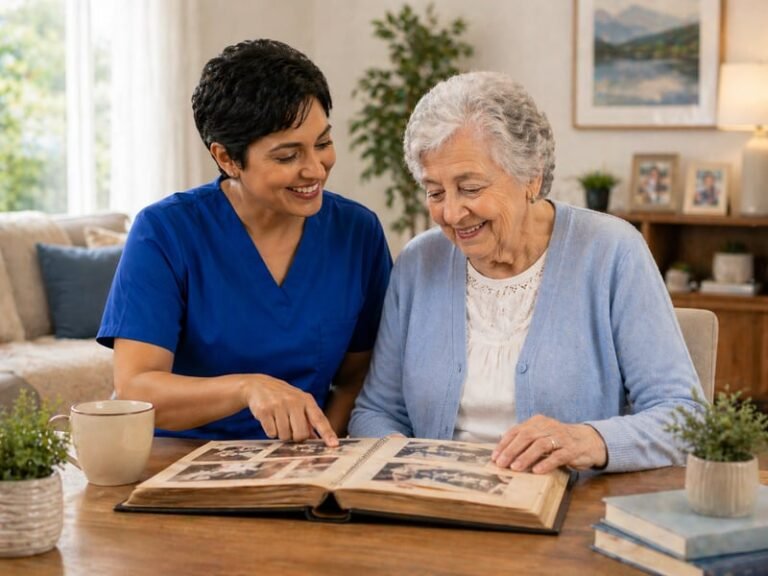
Here’s the encouraging part: companionship is often the easiest kind of help for a parent to accept. A caregiver who comes for conversation, a walk, a card game, or a trip to the store doesn’t feel like “care” at all. Over time, that relationship builds trust, and many families find their parent becomes open to more support once they know and like their caregiver.
Start small: how home care can begin
Home care doesn’t have to start with eight-hour days. At Premier Comfort Care, care plans can begin with short 1–2 hour microvisits for things like:
- Meal preparation and light housekeeping
- Grocery shopping, errands and rides to appointments
- Companionship and activities
- Medication reminders
- Help with bathing, dressing and grooming when your parent is ready
Starting small lets your parent get to know their caregiver, keeps costs manageable, and gives everyone a chance to see what actually helps. Many families also want to understand what home care costs before that first conversation, so they can talk about it honestly.
Getting siblings on the same page
Refusal gets harder when the family is divided. One sibling thinks Mom needs help now, another thinks everyone is overreacting, and the parent picks up on the disagreement. Before you talk with your parent, try to talk with each other. Share what each of you has noticed, agree on the one or two changes that matter most, and decide who will lead the conversation. Siblings who live far away can still help by handling bills, researching options or calling regularly to check in.
When to step back, and when you’re feeling trapped
Families often search “when to walk away from caring for elderly parents,” usually late at night after a hard day. If that’s you, it doesn’t mean you’re a bad son or daughter. It usually means you’re carrying too much alone.
Stepping back doesn’t have to mean walking away. It can mean:
- Sharing the load with siblings, even if they live far away (they can handle bills, research or phone calls).
- Bringing in professional help for the tasks that cause the most conflict, like bathing.
- Using respite care so you can rest without guilt.
- Accepting that a competent adult has the right to make choices you disagree with, as long as they understand the risks.
If you’re feeling trapped, burned out, or resentful, take that seriously. Your health matters too, and a caregiver who collapses can’t help anyone.
Carrying too much on your own? Let’s talk about what would help.
When safety is at risk
A parent who understands their situation has the right to make their own choices, even risky ones. But some situations call for faster action:
- Repeated falls or injuries
- Leaving the stove on, getting lost, or wandering
- Missing important medications or taking them incorrectly
- Signs of scams, financial exploitation or neglect
- Not eating, significant weight loss, or unsafe living conditions
In those cases, talk with your parent’s doctor, who can assess their health and memory. If you suspect abuse, neglect or exploitation, contact your county’s Adult Protective Services. And if your parent’s ability to make decisions is in question, an elder law attorney can explain options like power of attorney.
You don’t have to do this alone
Premier Comfort Care provides non-medical in-home care in Sacramento, Folsom, Roseville, Granite Bay, El Dorado Hills, Elk Grove, Rocklin, Citrus Heights and nearby communities. When you call, you’ll talk directly with our owner, Mariam. She can help you think through how to introduce care in a way your parent can accept.
Ready to take the first step?