

Your dad insists there’s a man standing in the corner. Your mom is talking to her sister, who passed away years ago. Or your loved one is brushing bugs off a hand that’s perfectly clean. Hallucinations can be unsettling to witness, and it’s natural to wonder whether you should correct them, play along or call the doctor.
This guide explains what dementia hallucinations are, what stage they usually appear, what can cause them besides dementia, and practical ways to respond. It also covers how Alzheimer’s and dementia care at home can help your loved one feel safe when the world starts to look different to them.
What are dementia hallucinations?
A hallucination is seeing, hearing, smelling, tasting or feeling something that isn’t there. In Alzheimer’s and other dementias, the Alzheimer’s Association says hallucinations are usually caused by changes in the brain (Alzheimer’s Association). Some are frightening. Others are ordinary images of people, places or objects from the past, such as seeing a friend’s face in a curtain or having a conversation with someone who isn’t in the room.
Hallucinations, delusions and paranoia
These three often get mixed up. The National Institute on Aging describes them this way (National Institute on Aging):
- Hallucination: sensing something that isn’t there, such as seeing a deceased parent in the room.
- Delusion: a firm belief in something that isn’t true, such as believing a spouse is unfaithful.
- Paranoia: a type of delusion in which the person believes others are lying, being unfair or out to get them.
Knowing the difference helps you choose how to respond, and it gives the doctor clearer information.
What stage of dementia is having hallucinations?
In Alzheimer’s disease, hallucinations typically occur in the later stages (Alzheimer’s Association). They can appear at other times, though, and in some other types of dementia, such as Lewy body dementia, vivid visual hallucinations can happen much earlier.
Because hallucinations aren’t always caused by the dementia itself, any new hallucination is worth mentioning to the doctor, whatever the stage.
What can cause hallucinations in older adults?
Dementia isn’t the only cause. The Alzheimer’s Association lists other possible causes, including (Alzheimer’s Association):
- Physical problems, such as kidney or bladder infections, dehydration or intense pain
- Vision or hearing problems
- Medications
- Alcohol or drug use
- Mental health conditions such as schizophrenia
That’s why both the Alzheimer’s Association and the National Institute on Aging recommend telling the doctor when hallucinations start, and reviewing illnesses and medications (National Institute on Aging). Having eyesight and hearing checked can help too. A sudden change in behavior, especially with fever or new confusion, can be a sign of infection and needs prompt medical attention.
What to do when a dementia patient starts hallucinating
Start by asking yourself one question: is this upsetting or dangerous for my loved one? The Alzheimer’s Association notes that if a hallucination isn’t causing distress or danger, you may not need to do anything at all (Alzheimer’s Association). If your mom is happily chatting with her late sister, gently joining the moment may be kinder than interrupting it.
If your loved one is frightened, these steps help:
- Stay calm and respond quickly. Use a soft, reassuring voice and a comforting touch.
- Don’t argue. Telling them it isn’t real rarely helps and can make them more upset.
- Acknowledge the feeling. “That sounds scary. I’m here, and you’re safe.”
- Change the setting. Move to another room, turn on more lights or step outside together.
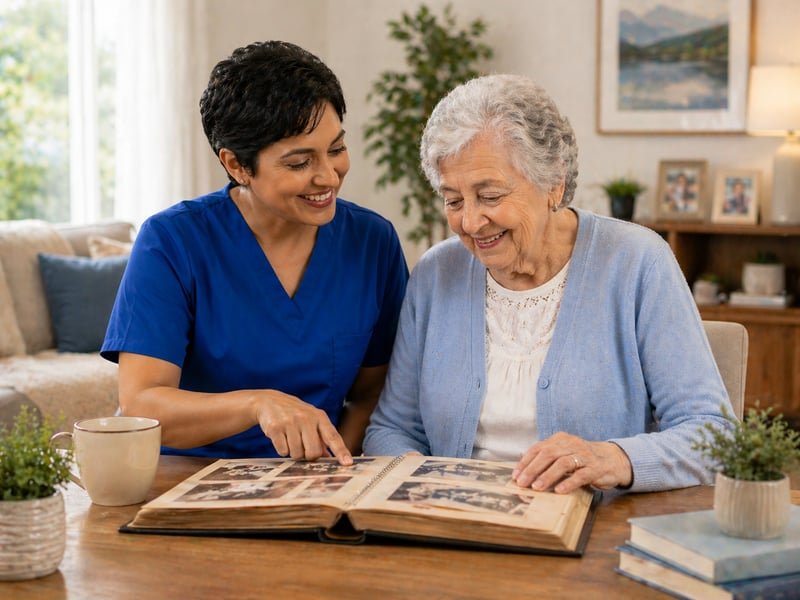
- Offer a distraction. Music, a snack, a photo album or a simple task can shift their attention.
- Keep them safe. Make sure they can’t reach anything they could use to hurt themselves or others.
Want a calm, trained caregiver by your loved one’s side?
How to bring someone out of a hallucination
You can’t always end a hallucination, but you can often change what your loved one is focusing on. Distraction works best when it’s gentle and feels natural:
- Suggest a short walk or a move to a bright, busy room. The Alzheimer’s Association notes frightening hallucinations often ease in well-lit areas with other people around.
- Pat their hand or arm to draw attention to you.
- Start a familiar song or activity they enjoy.
- Offer a warm drink and sit together.
What calms down hallucinations?
Comfort and connection usually do more than logic. A familiar person, a calm voice, soft music and a predictable routine all help. Over time, keeping track of when hallucinations happen can show you what makes them better or worse.
Should you agree with dementia patients’ delusions?
You don’t have to agree, and you don’t have to argue. The Alzheimer’s Association suggests responding truthfully without denying their experience: for example, “I know you see something, but I don’t see it” (Alzheimer’s Association).
For paranoia, such as accusing someone of stealing, the National Institute on Aging suggests not reacting if you’re blamed, letting the person know they’re safe, and keeping spare sets of things that often go missing, such as keys or glasses (National Institute on Aging). NIA also notes that paranoia is often linked to memory loss: if a person forgets where they put something, they may believe someone took it.
One important caution from NIA: suspicion or distrust may sometimes signal real mistreatment, so don’t automatically assume it’s paranoia. If something doesn’t feel right, look into it.
Dementia hallucinations at night
Many families notice hallucinations get worse in the evening or at night. Dim light, shadows, reflections and background noise are easier to misread, especially when a person is tired. A few changes to the home can make a big difference:
- Add lighting to reduce shadows, and use night lights in the bedroom, hallway and bathroom.
- Cover or remove mirrors if your loved one thinks they’re seeing a stranger.
- Close curtains at dusk so dark windows don’t reflect the room.
- Check for sounds that might be misheard, like a TV, radio or air conditioner.
- Turn off violent or upsetting shows. NIA notes a person may think events on TV are happening in the room.
If nighttime episodes are leaving you without sleep, having an overnight caregiver for a few nights a week can give you rest while someone calm stays close.
When fear leads to anger or refusing care
A person who is seeing or believing something frightening may push away, shout or refuse help. If outbursts are part of what you’re dealing with, our guide to dementia aggression and anger covers triggers and how to respond calmly. Fear can also show up during personal care. Mirrors, running water and an echoing bathroom can all be confusing, which is one reason a loved one may resist washing up. Our guide on what to do when someone with dementia refuses to bathe has practical tips.
When to call the doctor
Tell your loved one’s doctor about any new hallucinations, delusions or paranoia. Call promptly if:
- Hallucinations start suddenly or change quickly
- Your loved one has a fever, new confusion, pain or signs of infection
- A new medication was recently started or a dose was changed
- Your loved one or anyone else is at risk of being hurt
Medication is sometimes considered when symptoms are severe and non-drug approaches haven’t worked. The Alzheimer’s Association notes that antipsychotic drugs are associated with an increased risk of stroke and death in older adults with dementia, so the risks and benefits need a careful conversation with the doctor (Alzheimer’s Association).
Keeping a simple hallucination log
A short written record is one of the most useful things you can bring to a doctor’s appointment. It turns “Mom’s been seeing things” into a clear picture of what’s happening. Each time you notice a hallucination or delusion, jot down:
- When it happened: the date, the time of day and how long it lasted
- What your loved one described: what they saw, heard or believed
- How they felt: calm, curious, scared or angry
- What was going on: lighting, noise, visitors, TV, or a recent nap or meal
- Anything new: a medication change, a fall, a fever, or changes in eating, drinking or using the bathroom
- What helped: which response calmed them, and what made it worse
After a week or two, patterns often appear. You may notice episodes cluster in the evening, after a certain show, or when your loved one is thirsty or tired. Those clues help the doctor rule out medical causes and help everyone at home respond the same way.
How Premier Comfort Care helps
Premier Comfort Care provides non-medical Alzheimer’s and dementia care in Sacramento, Folsom, Roseville, Granite Bay, El Dorado Hills, Elk Grove, Rocklin, Citrus Heights and nearby communities. Our caregivers are Teepa Snow-trained, so they know how to stay calm, meet your loved one where they are, and redirect gently when the world feels confusing or frightening.
We focus on consistent caregivers, because a familiar face is reassuring when other things look strange. Our caregiver retention is 65%, five times higher than the industry average. Care is available from 1–2 hour microvisits to around-the-clock and overnight care, including weekends and holidays. When you call, you’ll talk directly with our owner, Mariam.
Let’s talk about how to help your loved one feel safe at home.
Sources: Alzheimer’s Association, Hallucinations; National Institute on Aging, Coping with hallucinations, delusions and paranoia.