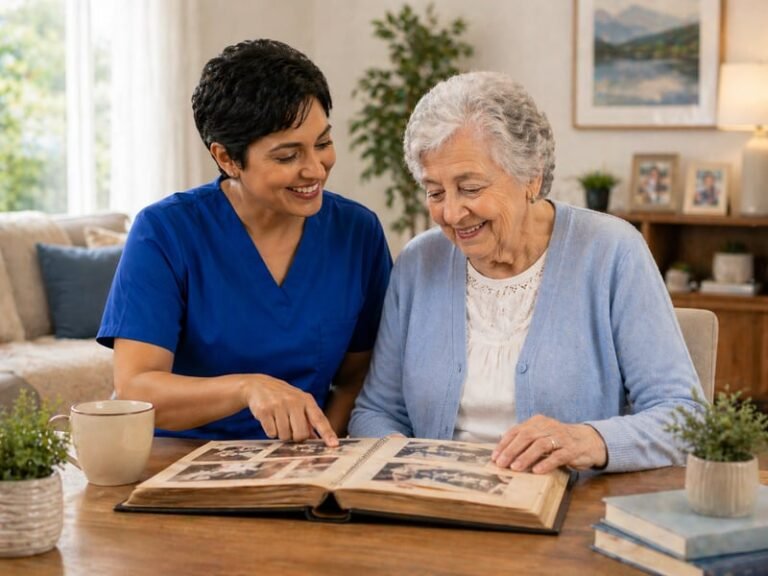

Taking care of a parent with dementia is one of the hardest things a family can do. The person who raised you may now need help remembering to eat, getting dressed, or knowing what day it is. Some days feel almost normal. Others are full of confusion, frustration and worry about what comes next.
If you’re in the middle of it, you’re not alone, and you don’t have to do it alone. This guide covers the practical side of caring for a parent with dementia at home: what to do when they refuse help, how to talk so they can follow along, how to protect your own health, and when Alzheimer’s and dementia care from trained caregivers can make home life safer and calmer for everyone.
What taking care of a parent with dementia at home really involves
Dementia is a general term for changes in memory and thinking that interfere with daily life. Alzheimer’s disease is the most common cause, but there are others, including vascular dementia and Lewy body dementia. Whatever the cause, caregiving tends to grow in three areas:
- Daily tasks. Meals, medication reminders, bathing, dressing, laundry and keeping the house safe and clean.
- Supervision. As memory and judgment change, your parent may leave the stove on, miss medications, get lost or fall for scams.
- Emotional support. Confusion often brings fear, frustration, sadness or suspicion. A calm, familiar presence matters as much as any task.
The amount of help needed changes over time. According to the Alzheimer’s Association, the disease typically moves through early, middle and late stages, and the middle stage is often the longest, lasting many years (Alzheimer’s Association). Planning for those changes early makes each step easier.
When an elderly parent with dementia refuses help
Refusal is one of the most common challenges families face. A parent with dementia may insist they’re fine, refuse to shower, or turn away a caregiver at the door. It helps to remember that this usually isn’t stubbornness. Dementia can make it hard for a person to recognize their own limitations, and accepting help can feel like losing control.
A few approaches that often help:
- Don’t argue the facts. Telling your dad he can’t remember things rarely convinces him. It usually makes him defensive. Focus on feelings and the next small step instead.
- Offer choices, not ultimatums. “Would you like to shower before breakfast or after?” works better than “You need a shower.”
- Change the framing. Introduce a caregiver as a friend, a helper for you, or someone who helps with the house, rather than “someone to take care of you.”
- Try again later. If a task turns into a struggle, step away and come back in 15 or 20 minutes. Mood and memory can shift quickly.
- Look for a reason behind the no. A refusal to bathe may come from feeling cold, embarrassed or afraid of falling. Fixing the cause often fixes the refusal.
Our caregivers are Teepa Snow-trained, which means they learn to approach people living with dementia gently, with calm body language and simple, respectful cues instead of pressure.
The 90-second rule and other ways to communicate
Many caregivers use what’s often called the “90-second rule”: after you ask a question or give a simple instruction, wait up to about 90 seconds for your parent to process it and respond before repeating yourself or rephrasing. It’s a commonly used caregiver guideline rather than a formal medical rule, but the idea behind it is sound. Dementia slows down how quickly the brain processes words, and rushing often leads to confusion or frustration.
Other communication tips that help:
- Approach from the front, make eye contact and say your name if needed.
- Use short sentences and ask one question at a time.
- Give yes-or-no or two-option questions instead of open-ended ones.
- Show as well as tell. Hand them the toothbrush rather than only describing the next step.
- Respond to the emotion. If your mom asks for her mother, who passed long ago, try “You miss her. Tell me about her” instead of correcting her.
- Keep your tone warm and unhurried. People living with dementia often pick up on stress even when they can’t follow the words.
Feeling stretched thin? Let’s talk about what would help.
Coping with dementia as a family caregiver
You’re part of a very large group. AARP’s 2025 report found that 63 million Americans, nearly 1 in 4 adults, provided ongoing care to a loved one in the past year (AARP). Many are doing it while working and raising families of their own.
Dementia caregiving is especially demanding because it’s constant and unpredictable. Cleveland Clinic describes caregiver burnout as a state of physical, emotional and mental exhaustion, with signs like withdrawal, irritability, changes in sleep or appetite, and getting sick more often (Cleveland Clinic). If that sounds familiar, take it seriously.
Ways to protect yourself:
- Accept that you can’t do everything. Decide what only you can do (being their son or daughter) and what others can take on.
- Build in regular breaks. Even a few protected hours a week makes a difference over months and years.
- Talk to someone. A support group, counselor, faith community or friend who understands can help you feel less alone.
- Keep up your own health. Your doctor’s appointments, sleep and exercise matter, because your parent depends on you staying well.
- Let go of guilt about getting help. Bringing in support doesn’t mean you love your parent less. It often means you can show up more patiently.
Help for carers of dementia patients
There’s more help available than most families realize. Some places to start:
- Your parent’s doctor. Ask about the diagnosis, what to expect, medication reviews and referrals. Bring a written list of the changes you’ve noticed.
- Caregiver resource centers. In the Sacramento area, the Del Oro Caregiver Resource Center serves unpaid family caregivers in a 13-county region that includes Sacramento, Placer, El Dorado and Yolo counties, and it can help fund respite services (Del Oro Caregiver Resource Center).
- Support groups. Many are offered in person and online, including groups specifically for adult children caring for parents.
- Respite care. Short-term care that gives you a break, whether it’s a few hours a week or a few days while you travel.
- Adult day programs. Supervised activities and social time during the day, which can also give you time to work or rest.
In-home caregivers for dementia patients
Professional in-home caregivers can take on the parts of dementia care that are hardest to manage alone, while your parent stays in a familiar place. Depending on the care plan, a caregiver can help with:
- Bathing, dressing, grooming and toileting, with patience and respect for privacy
- Meals, snacks and hydration reminders
- Medication reminders (caregivers remind; they don’t give medications like a nurse)
- Light housekeeping and laundry
- Engaging activities, conversation, walks and outings
- Supervision and wander prevention, day or night
- Rides to appointments
With dementia, consistency matters a great deal. A familiar face is less confusing and less frightening than a rotating cast of strangers. At Premier Comfort Care, our caregiver retention is 65%, five times higher than the industry average, so your parent can build a real relationship with the people who care for them. Families stay in the loop through our family portal.
Care can start small, even with 1–2 hour microvisits, and grow as needs change. It also helps to understand how Alzheimer’s progresses over time, so you can plan ahead for each stage instead of reacting in a crisis.
Will Medicare pay for a caregiver for a dementia patient?
Usually not for the kind of help most families need. Medicare covers part-time or intermittent skilled care, such as nursing or therapy, for people who are homebound and meet certain conditions. Medicare.gov states that Medicare doesn’t pay for 24-hour care at home, or for personal care like bathing, dressing and using the bathroom when that’s the only care someone needs (Medicare.gov).
Because most dementia care is this kind of daily, non-medical help, families usually pay for it in other ways:
- Private pay. Most families pay privately for non-medical in-home care. The cost depends on how many hours of care you need and the level of care.
- Long-term care insurance. Many policies cover in-home care. Check the daily benefit and waiting period.
- Veterans benefits. Wartime veterans and surviving spouses may qualify for the VA’s Aid and Attendance benefit (VA.gov).
- Family cost-sharing. Siblings often split costs, or cover some hours themselves while paid caregivers cover the rest.
Want to know what care could look like for your parent?
Making home safer for a parent with dementia
Small changes can prevent big problems. The Alzheimer’s Association notes that six in 10 people living with dementia will wander at least once, and many do so repeatedly (Alzheimer’s Association). Consider:
- Night lights in hallways, bedrooms and bathrooms
- Removing throw rugs and clutter that cause falls
- Grab bars and a shower chair in the bathroom
- Door chimes or alarms, and locks placed high or low, out of the usual line of sight
- Locking away medications, cleaning products, car keys and firearms
- Stove knob covers or an automatic shut-off device
Planning ahead while your parent can take part
If your parent is in the early stage, now is the time to talk about legal and financial planning, including powers of attorney, an advance directive, and their wishes for care. An elder law attorney can help. Involving your parent while they can still share their preferences protects their dignity and spares the family hard guesses later.
You don’t have to do this alone
Premier Comfort Care provides non-medical Alzheimer’s and dementia care in Sacramento, Folsom, Roseville, Granite Bay, El Dorado Hills, Elk Grove, Rocklin, Citrus Heights and nearby communities. When you call, you’ll talk directly with our owner, Mariam, not a call center. We’ll learn about your parent’s routines, personality and needs, then build a plan that helps them feel safe and helps you breathe again.
Ready to get support for your parent?
Sources: Alzheimer’s Association, Stages of Alzheimer’s; Alzheimer’s Association, Wandering; AARP, Caregiving in the US 2025; Cleveland Clinic, Caregiver burnout; Del Oro Caregiver Resource Center; Medicare.gov, Home health services; VA.gov, Aid and Attendance.