

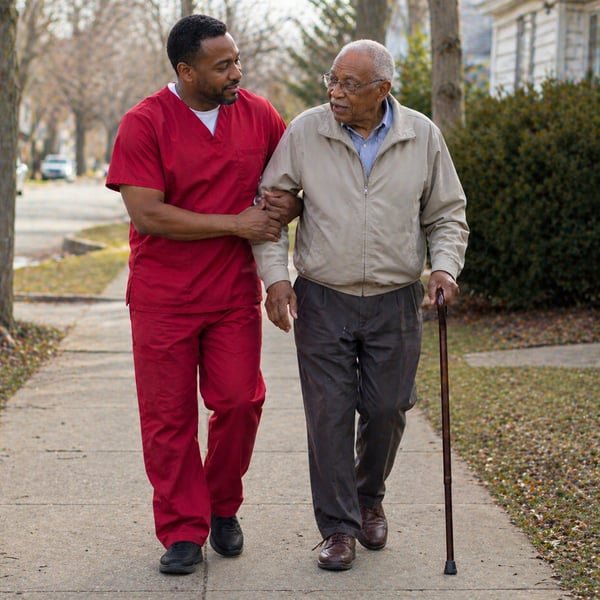
A hip fracture usually happens in a split second: a slip in the bathroom, a trip on a rug, a fall getting out of bed at night. Within hours your parent is in surgery, and within days the family is facing questions nobody prepared for. Where will Mom recover? Can she be alone? Who’s going to help her to the bathroom at 2 a.m.?
This guide walks through what hip fracture recovery usually looks like for older adults, what help your parent will need at home, how to make the house safer, and when 24-hour home care can help your parent recover safely in their own home.
How common are hip fractures in older adults?
Very common. The CDC reports that each year nearly 319,000 older adults are hospitalized for hip fractures, and that falls cause 88% of emergency visits and hospital stays for hip fractures (CDC). More than 1 in 4 people age 65 and older fall each year, and falling once doubles the chance of falling again (CDC).
The NIA notes that fall-related fractures can lead to a hospital or nursing home stay, long-term disability or even death, and that people with osteoporosis can be seriously hurt by a minor fall (NIA).
What happens after a hip fracture?
Most hip fractures are treated with surgery, and surgery within 24–48 hours may reduce complications. According to the American Academy of Orthopaedic Surgeons, most patients get out of bed and begin physical therapy the day after surgery, and moving early and doing rehab improves long-term results (AAOS OrthoInfo).
Physical and occupational therapists teach your parent how to walk safely again and how to handle daily activities like bathing and dressing. After the hospital, some people go to a short-term rehab facility until they can walk independently and manage daily activities, while others go home with in-home physical therapy, followed by outpatient therapy (AAOS OrthoInfo).
Will Medicare cover rehab after a hip fracture?
If your parent had a hospital inpatient stay of at least 3 days in a row and needs daily skilled care, Medicare can cover a short-term stay in a skilled nursing facility, up to 100 days per benefit period. In 2026 there’s a $217 daily copay from day 21 (Medicare.gov). Ask the hospital whether your parent was admitted as an inpatient or kept under observation, since observation time doesn’t count toward the 3 days.
How long does it take an elderly person to recover from a fractured hip?
There’s no single timeline. Recovery depends on the type of fracture and surgery, your parent’s health and strength before the fall, and how well rehab goes. Recovery is often measured in months rather than weeks. The AAOS notes that older patients often don’t get all the way back to their previous level of function (AAOS OrthoInfo), which is why the support around them during recovery matters so much.
Ask the surgeon and therapists what to expect for your parent specifically, including weight-bearing limits, movement precautions and when they can walk without a walker.
Questions to ask before your parent leaves the hospital
- Was my parent admitted as an inpatient, or kept under observation?
- Will they go to a rehab facility or straight home, and who decides?
- What movement precautions and weight-bearing limits should we follow, and for how long?
- Will home health nurses or therapists visit, and when will the first visit be?
- What equipment do we need before they come home?
- What warning signs mean we should call the doctor?
- When is the follow-up appointment with the surgeon?
Write the answers down, and ask for the discharge instructions in writing so everyone helping at home is working from the same plan.
Can elderly people live alone after a hip fracture?
Usually not right away. In the first weeks home, most people need help getting in and out of bed, walking to the bathroom, bathing, dressing and following their movement precautions. Nights are often the riskiest time, because of trips to the bathroom in the dark while still unsteady and possibly on pain medicine.
Whether your parent can eventually live alone again depends on how well they recover. Many families plan for round-the-clock or overnight help at first, then step down to fewer hours as their parent gets stronger. Others find that their parent needs ongoing help even after rehab ends.
Bringing a parent home after a hip fracture? Let’s plan the first weeks together.
How long does a hip patient need a caregiver?
It depends on the person. A common pattern looks something like this, though your parent’s doctor and therapists will guide the details:
| Phase | Typical needs |
|---|---|
| First days to weeks home | Help with every transfer, toileting, bathing, dressing and meals; close supervision, especially at night |
| As strength returns | Standby help for walking and bathing, help following the exercise plan, rides to therapy and appointments |
| Longer term | Help with housekeeping, errands and safety checks; ongoing care if function doesn’t fully return |
Planning care in phases helps families avoid two common mistakes: too little help in the first weeks, when the risk of another fall is highest, and too much help for too long, which can slow the return of independence.
Preparing the home before your parent comes back
- Clear the path from bed to bathroom. Remove throw rugs, cords and clutter.
- Add lighting, including night lights in the bedroom, hallway and bathroom.
- Set up a first-floor bedroom if stairs are hard.
- Install grab bars by the toilet and in the shower, and add a shower chair and raised toilet seat.
- Choose a sturdy chair with arms that’s easier to get up from.
- Keep everyday items within easy reach, between waist and shoulder height.
- Have the walker or cane and any equipment the therapists recommend ready before discharge.
The CDC lists home hazards such as broken steps and throw rugs among the risk factors for falls, along with lower-body weakness, balance problems, certain medicines, vision problems and poor footwear (CDC).
Watch: Mariam's tips for a safer home


Helping with daily care during recovery
Getting up and moving
Follow the therapist’s instructions exactly, including any hip precautions about bending, crossing legs or twisting. Walk beside your parent on their weaker side, and never pull on their arms to help them up.
Bathing and dressing
Use the shower chair and long-handled tools the therapists recommend, like a reacher, sock aid and long-handled sponge. Lay out clothes in order, with loose, easy-on pieces and non-slip shoes.
Eating and staying strong
Good nutrition helps healing. The NIA recommends calcium and vitamin D for bone health, along with regular physical activity as allowed, avoiding smoking and excess alcohol, and keeping a healthy weight (NIA). Ask the doctor whether your parent should be checked or treated for osteoporosis.
Watching for problems
Call the doctor about increasing pain, redness, swelling or drainage at the incision, fever, new swelling or pain in the leg, trouble breathing, or new confusion. Call 911 for chest pain or sudden shortness of breath.
Preventing another fall
Because one fall doubles the chance of another (CDC), preventing the next fall is part of recovery. The NIA suggests a medical alert system or keeping a phone within reach, and having someone check in every day (NIA). Ask the doctor to review medications that can cause dizziness, get your parent’s vision checked, and keep up the strength and balance exercises from therapy.
Can you drive after a hip fracture?
Not until the surgeon says it’s safe. Your parent needs to be off strong pain medicines, able to move their leg quickly and safely to brake, and able to get in and out of the car. Until then, plan rides to therapy and appointments, which is something a caregiver can help with.
When to consider more help, or a different setting
Some families find that recovery at home works well with the right support. Others find that their parent needs daily skilled nursing for longer, or that home simply can’t be made safe. If you’re weighing those options, our guide to nursing home vs. 24-hour home care compares them on care, cost and Medicare coverage.
Hip fractures and strokes are two of the most common reasons families suddenly need help at home. Our guide to stroke recovery at home covers what families can expect after a stroke.
How Premier Comfort Care helps
Premier Comfort Care provides non-medical 24-hour, overnight and hourly home care in Sacramento, Folsom, Roseville, Granite Bay, El Dorado Hills, Elk Grove, Rocklin, Citrus Heights and nearby communities. After a hip fracture, our caregivers help with transfers, walking, toileting, bathing, dressing, meals, exercise reminders and rides to appointments, and we often work alongside home health nurses and therapists.
Care can start around the clock and step down to 1–2 hour microvisits as your parent gets stronger, including weekends and holidays. Our caregiver retention is 65%, five times higher than the industry average, families can follow along through our family portal, and when you call, you’ll talk directly with our owner, Mariam.
Let’s help your parent recover safely at home.
Sources: CDC, Older adult falls data; American Academy of Orthopaedic Surgeons, OrthoInfo: Hip fractures; NIA, Falls and fractures in older adults; Medicare.gov, Skilled nursing facility care.