
A stroke can change a family’s life in an afternoon. One day your parent is driving to lunch with friends; a week later they’re coming home from the hospital with weakness on one side, trouble finding words, or a walker they’ve never used before. Families often find themselves learning a whole new role, fast.
This guide covers what stroke recovery at home usually looks like, how long recovery can take, what help your parent may need day to day, how to keep them safe, and when 24-hour home care or overnight help can make recovery at home possible.
How common is stroke, and why does recovery take help?
The CDC reports that more than 795,000 people in the United States have a stroke every year, and nearly 1 in 4 of those strokes happen to people who’ve had a stroke before. Stroke is a leading cause of serious long-term disability, and it reduces mobility in more than half of stroke survivors age 65 and older (CDC).
The National Institute of Neurological Disorders and Stroke (NINDS) calls stroke the number one cause of serious adult disability in the U.S. and worldwide, and notes that most people recover some function with treatment and rehabilitation (NINDS). Recovery is real, but it takes time, practice and support.
What happens after the hospital?
Rehabilitation usually starts in the hospital, often within 48 hours of the stroke, beginning with exercises for weakness or paralysis (NINDS). After the hospital, rehab may continue in an inpatient rehab unit, a skilled nursing facility, an outpatient program, or at home. Many stroke survivors return home after their hospital stay (NINDS).
What services are available for stroke patients?
A stroke rehabilitation team can include doctors, rehab nurses, physical therapists, occupational therapists, speech-language pathologists, recreation therapists, vocational therapists, social workers and psychologists (NINDS). At home, families often combine:
- Home health care ordered by the doctor: visiting nurses and therapists for a period after discharge
- Outpatient therapy once your parent can travel to appointments
- Non-medical home care for daily help, supervision and rides between therapy visits
- Support groups and community programs for stroke survivors and caregivers
Ask the hospital’s discharge planner or social worker which services your parent qualifies for before they come home.
How long does it take to regain movement after a stroke?
Every stroke is different, so there’s no set timeline. NINDS explains that rehab helps people relearn skills they’ve lost and learn new ways to do things, and that the brain can rewire itself, improving function over months or years (NINDS). Some people regain movement quickly; others improve slowly and keep making gains long after formal therapy ends.
How long does it take an 80-year-old to recover from a stroke?
Age, the size and location of the stroke, and a person’s health before the stroke all affect recovery. Older adults can and do improve with rehab, though recovery may be slower and some people need ongoing help with daily life. Ask your parent’s care team what to expect, and focus on steady progress rather than a deadline.
What are the stages of stroke recovery?
You may see stroke recovery described in “stages,” but different sources describe them differently, and there’s no single official list. A practical way to think about it is: the hospital phase, where the goal is stabilizing and starting rehab; the early weeks of rehab, when therapy is most intensive; and longer-term recovery at home, when practicing skills in daily life matters most.
Bringing a parent home after a stroke? Let’s plan the help they’ll need.
What help does a stroke survivor need at home?
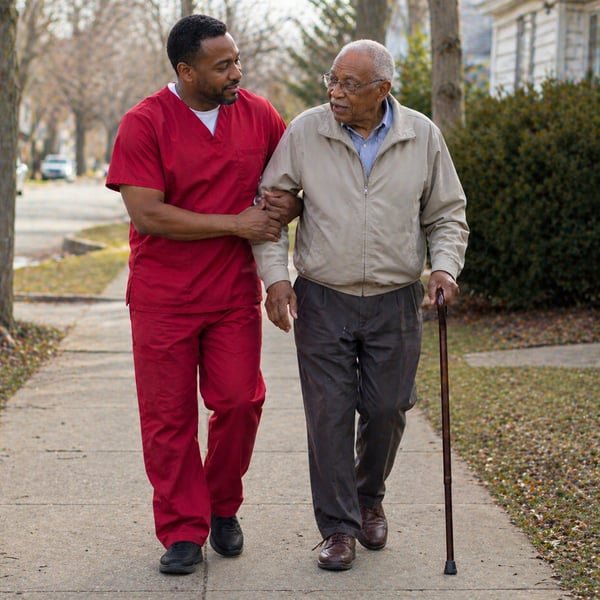
Needs vary widely. NINDS lists weakness or paralysis and loss of the ability to walk, speak or think clearly among the effects of stroke (NINDS). At home, that can mean help with:
- Moving safely: getting in and out of bed, walking, transfers to the toilet, shower and car
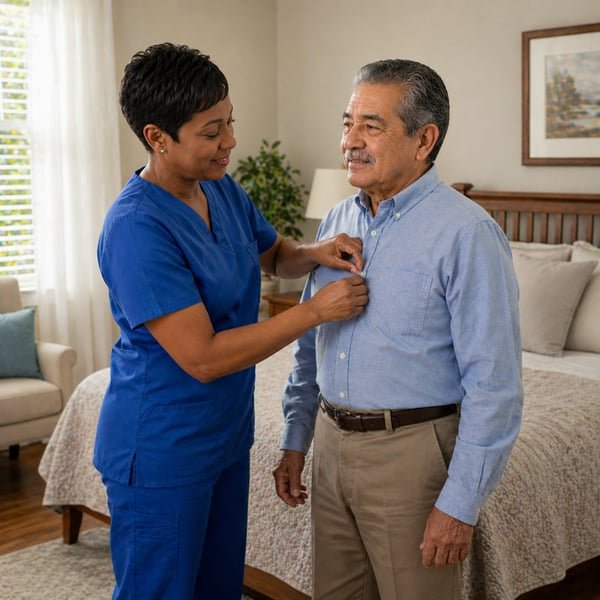
- Personal care: bathing, dressing and grooming, especially with weakness on one side
- Meals: cooking, setting up food so it’s easy to eat, and following any diet the doctor recommends
- Medication reminders, since many stroke survivors take several new medicines
- Communication: patience and time if speaking or understanding is hard
- Therapy practice: encouraging the exercises the therapists prescribe
- Rides to therapy and doctor appointments
- Supervision, especially at night, if your parent is unsteady or confused
Tips for caring for a stroke patient at home
Let them do what they can
It’s natural to want to do everything for your parent, but practicing everyday tasks is part of recovery. Give extra time, set things up so they can succeed, and help only with the parts they can’t do yet.
Help with dressing and bathing
Dress the weaker side first and undress it last. Choose loose clothing, elastic waists and slip-on shoes with non-slip soles. Use a shower chair, grab bars and a handheld shower head, and test the water temperature, since a stroke can affect feeling on one side.
Support communication
If your parent has trouble speaking or understanding, talk in a calm, quiet place, use short sentences, ask yes-or-no questions, and give them time to answer. Don’t finish their sentences unless they want you to. A speech-language pathologist can suggest specific strategies.
Watch for mood changes
Frustration, sadness and anxiety are common after a stroke, for survivors and caregivers alike. Tell the doctor if your parent seems persistently down, loses interest in things, or withdraws, since depression can be treated and can affect recovery.
Watch: help with bathing and teaming up on care


Making the home safer
Weakness, balance problems and new medicines all raise the risk of falls. The NIA recommends fall-proofing the home, keeping a phone or emergency response system within reach, and arranging a daily check-in (NIA). Practical steps:
- Clear walkways and remove throw rugs and cords
- Add night lights between the bedroom and bathroom
- Install grab bars and use a raised toilet seat and shower chair
- Move the bedroom to the first floor if stairs are hard
- Put everyday items within easy reach on the stronger side
The same steps help after a fall, too. Our guide to caring for a parent after a hip fracture covers preparing the home and helping with transfers in more detail.
If your parent will be alone for stretches during recovery, our guide to medical alert systems for seniors explains what these devices can and can’t do.
Know the warning signs of another stroke
Having one stroke raises the chance of another, so everyone in the home, including caregivers, should know the signs. The CDC lists sudden numbness or weakness in the face, arm or leg (especially on one side), sudden confusion or trouble speaking, sudden trouble seeing, sudden trouble walking or loss of balance, and a sudden severe headache with no known cause (CDC).
The CDC’s B.E. F.A.S.T. check is easy to remember:
- B – Balance: sudden loss of balance or dizziness
- E – Eyes: sudden vision changes
- F – Face: ask them to smile. Does one side droop?
- A – Arms: ask them to raise both arms. Does one drift down?
- S – Speech: ask them to repeat a simple phrase. Is it slurred or strange?
- T – Time: call 911 right away and note the time symptoms started.
Don’t drive your parent to the hospital; call 911 for an ambulance. Symptoms that go away after a few minutes may be a transient ischemic attack (a “mini-stroke”) and still need to be reported to a health care provider right away (CDC).
What is the quality of life like after a stroke?
It varies a great deal. Many stroke survivors return to much of the life they enjoyed, sometimes with new routines, equipment or help at home. Others live with lasting changes and need ongoing support. Families can make a real difference by keeping their parent connected to friends, hobbies and outings, celebrating progress, and making sure help is in place so their parent can stay safely in the home they know.
Does Medicare pay for in-home care after a stroke?
Medicare may cover home health care, such as visiting nurses and therapists, for a period after a stroke if your parent qualifies. It doesn’t pay for long-term non-medical care, such as help with bathing, dressing and supervision, when that’s the main care someone needs (Medicare.gov). Families usually pay for non-medical home care privately or with long-term care insurance.
Taking care of the caregiver
Caring for a parent after a stroke is demanding, physically and emotionally. Ask other family members to share specific tasks, take breaks before you’re exhausted, and accept help. Overnight care in particular can let a spouse or adult child sleep through the night again, which makes the days more manageable for everyone.
How Premier Comfort Care helps
Premier Comfort Care provides non-medical 24-hour, overnight and hourly home care in Sacramento, Folsom, Roseville, Granite Bay, El Dorado Hills, Elk Grove, Rocklin, Citrus Heights and nearby communities. After a stroke, our caregivers help with transfers, walking, bathing, dressing, meals, medication reminders, exercise encouragement, rides to therapy and companionship, and we often work alongside home health nurses and therapists.
Care can start around the clock and step down to 1–2 hour microvisits as your parent regains independence, including weekends and holidays. Our caregiver retention is 65%, five times higher than the industry average, families can follow along through our family portal, and when you call, you’ll talk directly with our owner, Mariam.
Let’s talk about helping your parent recover at home.
Sources: CDC, Stroke facts; CDC, Signs and symptoms of stroke; NINDS, Stroke recovery; NIA, Falls and fractures in older adults; Medicare.gov, Long-term care.