

When someone you love has dementia, caregiving can feel like it never pauses. They may need help all day, ask the same question every few minutes, wander in the evening or wake up confused at night. Many dementia caregivers go months without an uninterrupted afternoon, let alone a full night’s sleep.
Respite is how you get some of that time back. This guide focuses on what makes respite care different when dementia is involved: protecting the routine, keeping caregivers consistent, preparing for visits and overnights, and finding programs that can help pay.
Can someone get respite care for dementia patients?
Yes. Respite care is available at every stage of dementia, from early memory problems to late-stage care. The Alzheimer’s Association describes respite as a temporary rest for the caregiver while the person living with Alzheimer’s continues to receive care in a safe environment, and notes it can happen at home, at an adult day center, or with a short stay in a care community (Alzheimer’s Association).
What changes with dementia is the kind of respite that works best, and how carefully it needs to be set up.
Why respite care for dementia is different
- Change can be upsetting. New places, new faces and broken routines often bring confusion, anxiety or agitation.
- The person may not understand why you’re leaving. They may feel abandoned, or search for you.
- Communication takes skill. A caregiver needs to know how to redirect, reassure and avoid arguing.
- Safety needs are higher. Wandering, falls, and forgetting to eat or drink are real risks.
- Evenings and nights can be the hardest. Sundowning and night waking are often when caregivers need relief most.
None of this means respite won’t work. It means the right setup matters.
In-home respite: keeping the routine intact
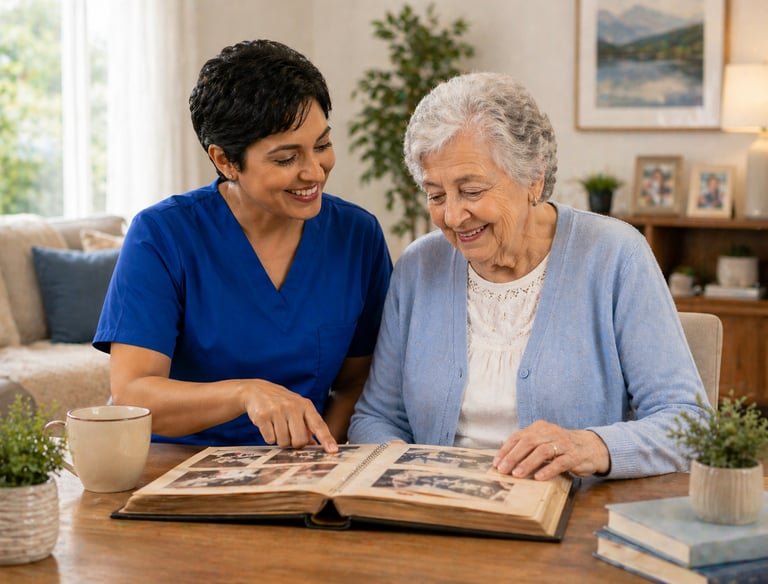
For many people with dementia, in-home respite is the gentlest option, because so little changes. They stay in their own chair, with their own coffee cup, their own photos and the view they know. The only new thing is the person sitting with them.
A good respite caregiver steps into your loved one’s existing day rather than creating a new one:
- Meals and snacks at the usual times, the usual way
- The same morning or bedtime steps, in the same order
- Favorite music, TV shows, walks or activities
- The words and cues that usually calm them
- Medication reminders on schedule
The Alzheimer’s Association notes that a person with dementia may have difficulty adjusting to a new environment, and that regular stays can make out-of-home respite easier over time (Alzheimer’s Association). In-home respite avoids that adjustment altogether, which is why many families start there.
The same familiar caregiver matters
With dementia, who comes is as important as when. Each new face means starting over: a stranger in the house, new questions, new ways of doing things. A consistent caregiver becomes familiar over time, even if your loved one can’t remember their name, and that familiarity often shows up as less resistance and calmer visits.
When you talk to a provider, ask how they keep caregivers consistent, what happens when the regular caregiver is sick, and how a new caregiver will be introduced. Ask about dementia training too: how caregivers handle repetition, agitation, refusals and wandering.
Want a familiar caregiver your loved one can count on?
How to prepare your loved one for a respite visit
- Start before you need it. Begin with short visits while you’re home, even in another room. Your loved one gets used to the caregiver while you’re nearby.
- Keep the explanation simple. “This is Maria. She’s going to have lunch with you today.” Long explanations about why you’re leaving can increase anxiety.
- Choose their best time of day. For many people that’s late morning. Avoid starting new visits right before a hard time, like late afternoon.
- Leave without a long goodbye. A warm, brief “I’ll see you later” often goes better than a drawn-out exit.
- Keep visits regular. The same day and time each week turns respite into part of the routine.
What to tell the respite caregiver
Write a one-page “about me” sheet and keep it on the fridge. Include:
- What your loved one likes to be called, and a few facts about their life, work and family
- Their daily routine, with meal, nap and bedtime times
- Favorite foods, music, shows and topics of conversation
- What upsets them, and what usually helps
- Signs they need the bathroom, are in pain or are getting tired
- Medications and timing (the caregiver gives reminders), doctors’ numbers and emergency contacts
The Alzheimer’s Association recommends keeping the person’s medical team contacts and a full medication list (with dosage and frequency) easy to find at all times, especially for unexpected situations (Alzheimer’s Association).
Watch: calmer ways to respond


Overnight respite for dementia caregivers
If your loved one wakes at night, wanders, or needs help to the bathroom, you may not have slept well in months. Overnight respite puts a caregiver on duty through the night, so you can sleep, even in the next room. The caregiver handles waking, toileting, redirection back to bed and safety checks.
Even one or two overnights a week can make daytime caregiving feel far more manageable. Longer stretches of around-the-clock care at home also let you travel or recover from your own illness while your loved one stays put.
Respite during sundowning and the hard hours
Late afternoon and evening are often the hardest part of the day with dementia. Restlessness, confusion and agitation can build just as the family caregiver is running out of energy. Scheduling respite for these hours, rather than mid-morning when things are calmer, can bring the biggest relief. A caregiver can start a calming routine, prepare dinner, offer a walk or music, and keep the house quiet while you rest.
Can you get free respite care for dementia patients?
Sometimes. Several programs can lower or cover the cost:
- Del Oro Caregiver Resource Center. Can fund respite services for family caregivers of adults with dementia and other cognitive conditions in Sacramento, Placer, El Dorado and 10 other counties, at no cost to the caregiver (Del Oro Caregiver Resource Center). Call (916) 728-9333.
- The Alzheimer’s Association. Suggests asking your local chapter about financial assistance such as scholarships, sliding-scale fees or government programs (Alzheimer’s Association). Helpline: 800.272.3900.
- VA respite care. Eligible veterans may get respite at home, at adult day health care, or with a short nursing home stay (U.S. Department of Veterans Affairs).
- Family and friends. NIA notes respite from family, friends or volunteers may have no cost at all.
Does Medicare pay for respite care for Alzheimer’s?
Original Medicare generally doesn’t pay for respite at home. There are two exceptions worth knowing. First, through the hospice benefit, Medicare covers most of the cost of up to five consecutive days of respite in a hospital or skilled nursing facility (National Institute on Aging), and you may pay 5% of the Medicare-approved amount (Medicare.gov).
Second, Medicare’s GUIDE (Guiding an Improved Dementia Experience) model offers dementia care navigation and caregiver support, including respite, to eligible people with Original Medicare through participating programs (CMS GUIDE model). Locally, Del Oro has partnered with Tembo Health to offer GUIDE services at no cost to people with Traditional Medicare.
How long does Medicare cover respite care for dementia?
Under hospice, respite stays are up to five days at a time. Outside of hospice and GUIDE, there’s generally no Medicare respite benefit, so most families combine private pay, long-term care insurance, local programs and family help.
What do dementia caregivers need most?
Time, sleep and someone to talk to. The Alzheimer’s Association’s caregiver stress check asks whether you can find time for things that make you feel fulfilled, take care of your own health, and call on a support network, and it recommends scheduling time for yourself with respite care (Alzheimer’s Association). If guilt is what stops you, our guide to caregiver guilt looks at how to take a break without it.
Working caregivers often need time off too. If you’re employed in California and caring for a seriously ill parent or spouse, our guide to California Paid Family Leave for caregivers explains how partial wage replacement works.
Watch: checking in while you're away

Dementia respite care with Premier Comfort Care
Premier Comfort Care provides non-medical in-home respite for families caring for someone with Alzheimer’s or another dementia in Sacramento, Folsom, Roseville, Granite Bay, El Dorado Hills, Elk Grove, Rocklin, Citrus Heights and nearby communities. Our caregivers are Teepa Snow-trained, so they learn to approach people living with dementia calmly, with gentle body language and simple cues.
We focus on keeping the same caregivers in the home, and our caregiver retention is 65%. Visits can be as short as 1–2 hours or as long as overnights and several days of around-the-clock care, including weekends and holidays. You can check in through our family portal while you’re away, and when you call, you’ll talk directly with our owner, Mariam.
Let’s plan a break that keeps their day familiar.
Sources: Alzheimer’s Association, Respite care; Alzheimer’s Association, Caregiver stress; National Institute on Aging, What Is Respite Care?; Medicare.gov, Hospice care; CMS, GUIDE model; Del Oro Caregiver Resource Center; VA, Respite care.